Updated: July 2026
Halmahera's Spice Tree Heritage: A Walking Tour Through Living History
The clove and nutmeg empires that shaped your kitchen.
Why Halmahera’s spice plantations matter — and where to walk them today.
Until the early 1800s, every clove tree on Earth grew within a 200-kilometer radius of where you’re reading this. Cloves came from Ternate and Tidore (Halmahera’s neighboring small islands), nutmeg from the Banda Islands further south. The Maluku archipelago was the world’s spice cabinet.
Why Halmahera, not Ternate
Ternate gets the historical credit because it was the trading hub — the Sultan’s palace, the Portuguese fort, the harbor where European ships docked. But the actual cultivation has always happened on Halmahera, the bigger island just across the strait. After Dutch consolidation in the 1620s, plantations on Halmahera supplied 70% of the cloves shipped to Europe.
Today, Ternate is a tourist destination. Halmahera is a working island. The plantation walks here are guided by farmers, not docents.
The Galela plantation walk
Our standard heritage walk visits the Pakke family’s clove grove in Galela, central Halmahera. Nine generations have farmed this 4-hectare plot — the founding generation planted trees that still produce flowers (the “cloves” of cooking) every year. The family will let you taste a fresh clove flower picked from the tree, then dried and ground in their kitchen — the difference between fresh and processed is striking.
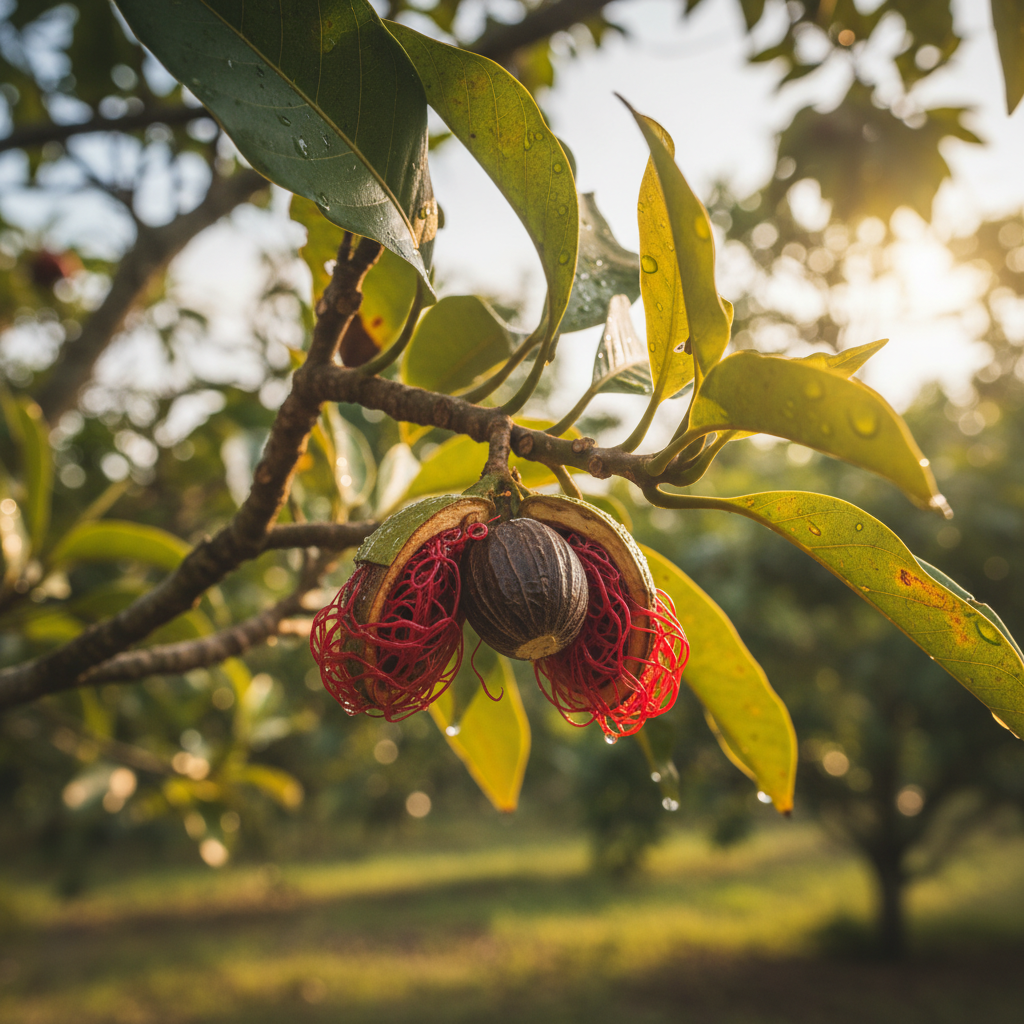
Adjacent groves grow nutmeg trees with their distinctive yellow fruit splitting open to reveal the crimson mace aril and brown seed inside. Fresh nutmeg, ground on-site, has a citrus quality that’s gone in commercial powder.
What you’ll buy home
Whole cloves and nutmegs sold by the kilo from the same farms — typically $8-$15 per kg. The same product retailed in Europe runs $80-$200 / kg. The trade arbitrage is real, but airline carry-on limits make it personal-consumption only.
Smoked spice salt — a Halmahera specialty — is more luggage-friendly. The Pakke family makes a clove-and-cardamom salt that’s exceptional with grilled fish. Sold in 200g jars, $4-$6 each.
Want a heritage-led trip?
Tell us if you want to focus on plantations specifically (vs. mixed itinerary). We can tailor a 4-day plantation-only trip.
Beyond the rustle of leaves on ancient nutmeg trees and the intoxicating aroma of cloves carried on the equatorial breeze, Halmahera whispers tales of ambition, exploration, and natural splendor. This sprawling island, the largest in the Maluku archipelago, offers more than just a historical stroll; it presents an immersive journey into a world where global empires clashed for fragrant riches, and where a vibrant culture continues to thrive amidst striking, untamed landscapes. A luxury sojourn here is not merely a visit, but an expedition into the very soul of the Spice Islands, revealing layers of history, gastronomy, and biodiversity that captivate and inspire.
The echoes of empire: Halmahera’s global spice legacy
To walk among Halmahera’s spice trees is to tread upon ground that once ignited the imagination of explorers and fueled the ambitions of empires. For centuries, the allure of cloves and nutmeg, indigenous to this corner of the world, was . These spices were not merely commodities; they were currencies, objects of desire, and catalysts for a global trade network that irrevocably reshaped the world. Halmahera, though often overshadowed by its smaller, more historically prominent neighbours like Ternate and Tidore, was an integral part of this legendary archipelago, providing the very bounty that sparked an age of discovery and fierce colonial rivalries.
The quest for these precious spices led European powers on epic voyages across perilous seas, culminating in intense struggles for dominance over the Maluku islands. The Portuguese were among the first to arrive in the region, establishing a presence in 1512, followed swiftly by the Spanish, Dutch, and English. Each vied for control, building formidable fortresses and engaging in brutal conflicts that left an indelible mark on the landscape and its people. The Dutch East India Company (VOC), in particular, established a near monopoly, enforcing strict policies to control production and maintain exorbitant prices, forever altering the geopolitical landscape and the very fabric of local life. These historical echoes resonate in the remnants of colonial architecture and the diverse cultural heritage found throughout Halmahera today.
The profound impact of this spice trade extends far beyond the archipelago itself. The wealth generated from these aromatic treasures funded European expansion, propelled scientific inquiry, and inspired culinary innovation across continents. From the intricate spice routes that snaked across oceans to the development of early global capitalism, Halmahera’s role in shaping human history is undeniable. As you trace the paths once trodden by traders and colonialists, you are not just observing history; you are touching the living legacy of a global phenomenon, understanding how the subtle power of a simple spice could ignite such monumental human endeavor.
A taste of terroir: Culinary journeys and local life
Today, Halmahera’s spice heritage is not confined to history books or museum exhibits; it lives vibrantly in the everyday rhythms of its people and the distinctive flavors of its cuisine. Beyond their global export, cloves, nutmeg, and other indigenous spices are the very soul of local gastronomy, infusing dishes with a unique depth and character impossible to replicate elsewhere. Visiting bustling local markets, a luxury traveler can witness the fresh bounty firsthand – mounds of sun-dried cloves, freshly grated nutmeg, and an range of exotic fruits and vegetables – all indicators of a fertile land and a rich culinary tradition.
Engaging with the local communities offers a rare glimpse into the authentic heart of Halmahera. The island is a mosaic of diverse indigenous cultures, each with its own traditions, languages, and unique relationship with the land. Halmahera is home to at least seven distinct indigenous languages, reflecting its deep cultural . Many families continue to cultivate spice trees using methods passed down through generations, embodying a sustainable connection to nature that predates modern agriculture. A bespoke experience might include a private cooking class with a local chef, learning to prepare traditional dishes like “Nasi Jaha” (spiced sticky rice in bamboo) or “Gohu Ikan” (raw fish salad with citrus and spices), allowing guests to taste the island’s authentic flavors firsthand and appreciate the intricate balance of its spice-infused cuisine.
These culinary journeys extend beyond the plate, offering a deeper understanding of Halmahera’s terroir and the lives it sustains. Imagine a guided visit to a small, family-run spice processing facility, where you can observe the meticulous hand-sorting of cloves or the traditional drying of nutmeg mace. Such experiences are crafted to provide an intimate connection with the source of these precious ingredients, highlighting the craftsmanship and dedication of the local people. It’s an opportunity to appreciate the profound link between the land, its bounty, and the enduring cultural practices that define Halmahera, offering a truly immersive and sophisticated culinary adventure that transcends mere dining.
Beyond the canopy: Halmahera’s untamed beauty and bespoke experiences
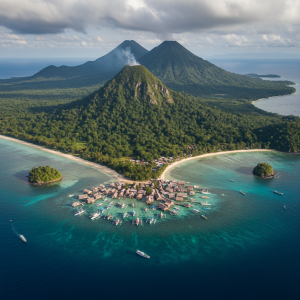
While the spice trees offer a compelling narrative, Halmahera’s allure extends far beyond its historical groves. The island is a true frontier of natural beauty, a sprawling canvas of dramatic volcanic peaks, pristine rainforests, and an intricate coastline fringed with untouched beaches and turquoise waters. As the largest island in the Maluku archipelago, its sheer size and relatively undeveloped nature mean that vast swathes of its landscape remain wild and pristine, offering a sense of discovery that is increasingly rare in the modern world. This untouched quality is a luxury in itself, appealing to those who seek genuine escape and communion with nature.
For the discerning traveler, Halmahera presents bespoke experiences designed to showcase its striking natural wonders. Imagine embarking on a private boat charter to navigate the labyrinthine coastlines, discovering secluded white-sand coves perfect for a gourmet picnic or an exclusive swim. Guided treks through the dense, emerald jungles can lead to hidden waterfalls cascading into crystal-clear pools, or offer opportunities for birdwatching, where endemic species like the Wallace’s Standardwing bird of paradise might be spotted. The island’s volcanic landscape, crowned by active peaks such as Mount Ibu, which stands at 1,340 meters (4,396 feet) tall, provides dramatic backdrops for exploration and photography, offering panoramic vistas that stretch to the horizon.
The emerging luxury accommodations on Halmahera are designed to complement this pristine environment, offering sophisticated comfort while maintaining a deep respect for local culture and ecology. Boutique eco-lodges and secluded resorts provide an exclusive sanctuary after a day of exploration, blending seamlessly with their natural surroundings. These curated havens ensure that every aspect of your stay is both indulgent and authentic, from personalized service to gourmet dining featuring local ingredients. A journey to Halmahera is an invitation to experience an Indonesia less traveled, a destination where the whispers of history mingle with the raw beauty of an untamed wilderness, promising an memorable adventure for those who truly appreciate the extraordinary.